


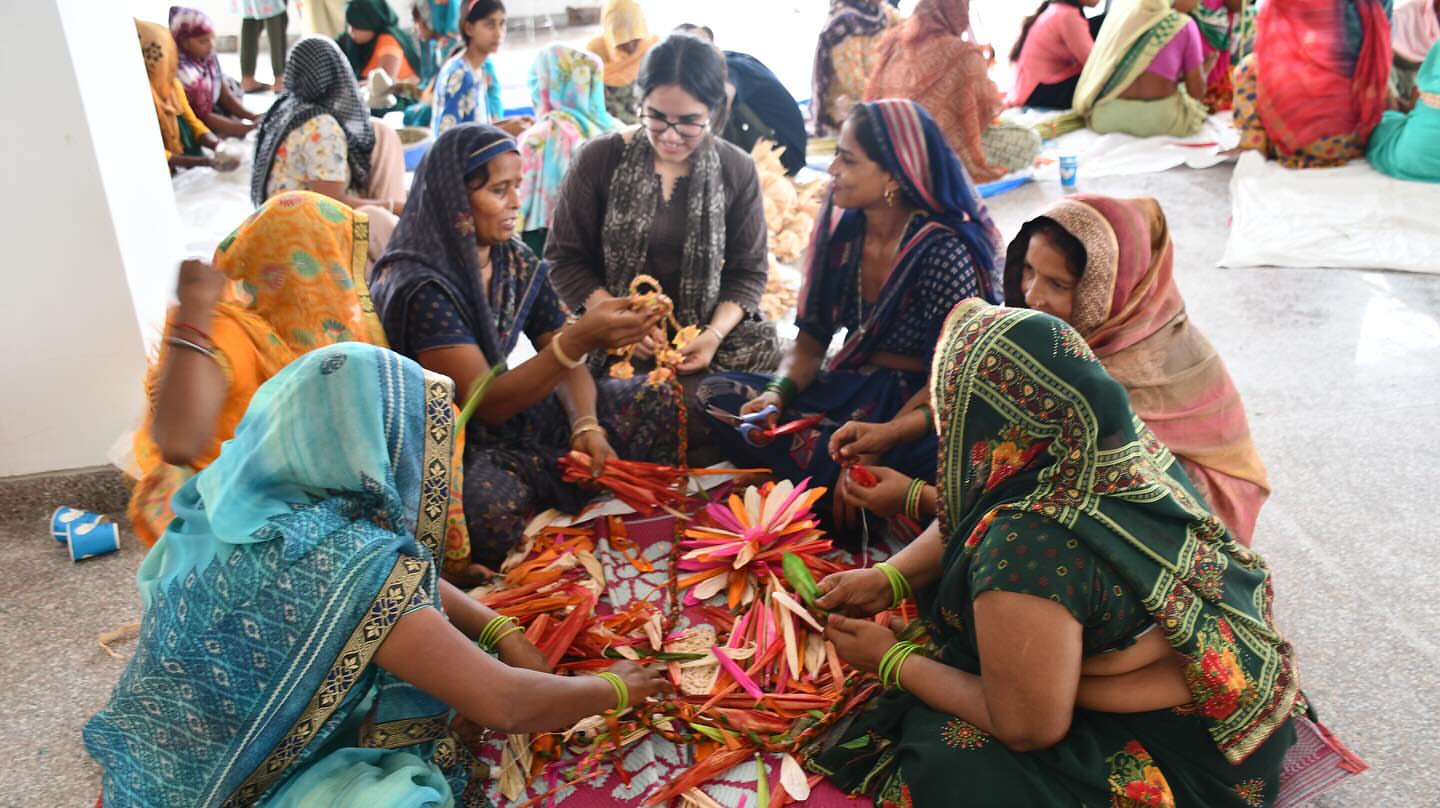
In the quiet lanes of Jugsana Kalan, a village tucked within Bulandshahr’s agrarian heartland, something remarkable is taking shape. What once lay scattered across fields as discarded cornhusk and agri-waste is now being reimagined—not as waste, but as raw material for livelihood, dignity, and enterprise.
This is the story of how Phoolja Foundation is building more than skills—we’re nurturing rural entrepreneurs who are crafting their own futures, one handmade product at a time.
The Beginning: A Village, A Vision, and a Pile of Waste
Like most agricultural regions, Bulandshahr has long faced a seasonal dilemma: what to do with the leftover husk, dried leaves, and natural fiber waste after each harvest. For decades, the answer was simple—burn it, bury it, or let it rot.
But in early 2024, the team at Phoolja Foundation asked a different question: What if this waste could be turned into wealth?
And so began our Skill to Scale initiative—an effort to equip rural women and youth with the ability to turn agricultural by-products into eco-friendly, market-ready goods like:
- Cornhusk flowers and floral bouquets
- Paper pulp-based plant pots and trays
- Handwoven agri-waste baskets and home décor items
A Training Program Rooted in Local Strengths
The training wasn’t imported from outside—it was designed with rural realities in mind. Conducted within the community itself, the program brought together women from across Jugsana Kalan and nearby villages. Many had never earned their own income. Some had never imagined themselves as entrepreneurs.
Through carefully structured sessions, participants learned:
- How to prepare raw agri-waste for crafting
- Techniques to mold, fold, and weave cornhusk and paper pulp into products
- Basics of product pricing, quality control, and design refinement
- Packaging and presentation for local exhibitions and urban markets
Each session was more than a lesson—it was a shift in mindset.
From Learners to Leaders: Stories from the Field
One of the early participants, Neelam, arrived at her first session unsure of what to expect. A homemaker with no previous income of her own, she had only seen cornhusk as something to burn or feed to cattle. Today, she manages a small group of women artisans producing custom flower bouquets and handcrafted gift items.
“We used to think of these things as useless. Now, the same husk earns us money—and respect,” she shares with quiet pride.
Another artisan, Sangeeta, discovered a natural skill for shaping paper pulp into pots and trays. “This is not just a hobby. It’s our business now,” she says.
What’s Next: Designing a Rural Creative Economy
We envision Bulandshahr not just as a training site—but as a hub for rural creativity and green entrepreneurship. Our upcoming plans include:
-
- Expanding into more villages and panchayats
- Introducing new product categories (festival hampers, utility décor and more)
- Building a rural artisan brand line under Phoolja
- Deepening market linkages through digital platforms and partnerships
